
What's the Deal with Diastasis Recti? - Part 1
Dec 24, 2019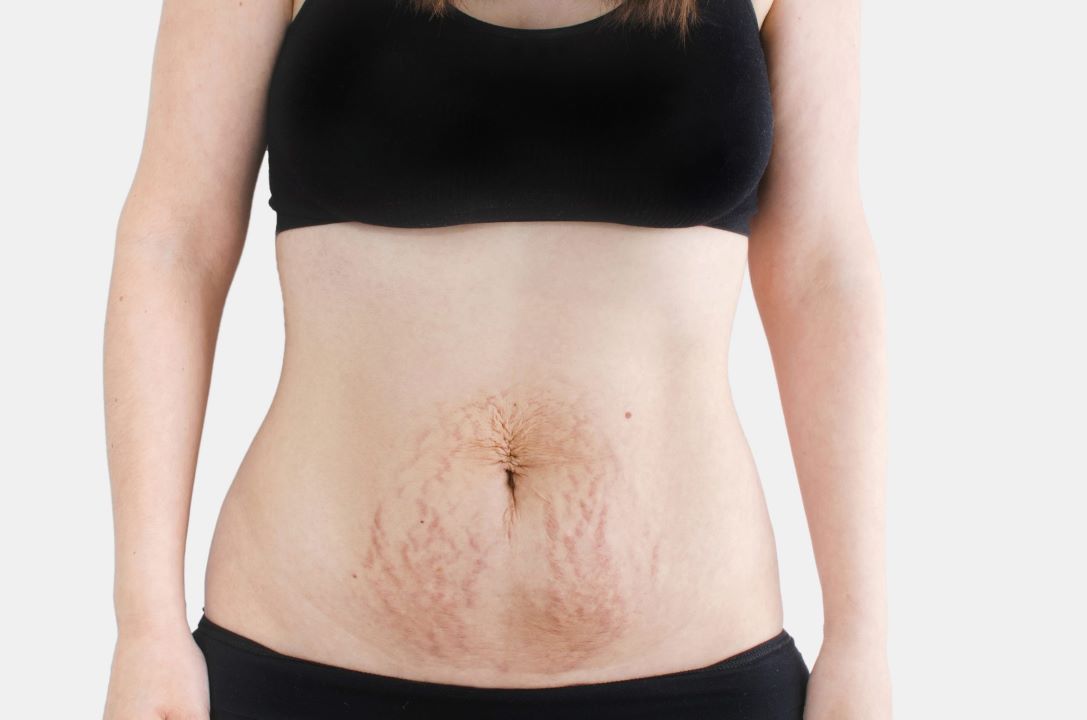
Understanding Diastasis
I recall when I was first pregnant; I bought The Pregnancy Bible and read it diligently every day to see what was happening to me and my babe.
About three-quarters of the way through the book there was a tiny paragraph about diastasis recti that described it as when the abdominal muscles separate due to the stretching of the connective tissue during pregnancy. Nothing was included about stats, how to check for it, how to prevent it or what to do about it!
It sounded painful! And I thought for sure I would know if I had it. Not so; it took four years to diagnose it in myself. I kept learning (and am still learning) all about it.
Diastasis (DRA) is so far poorly researched, but thankfully the research world is realizing the impact and increased occurrence of this condition, so more studies are in the works.
What Studies Tell Us
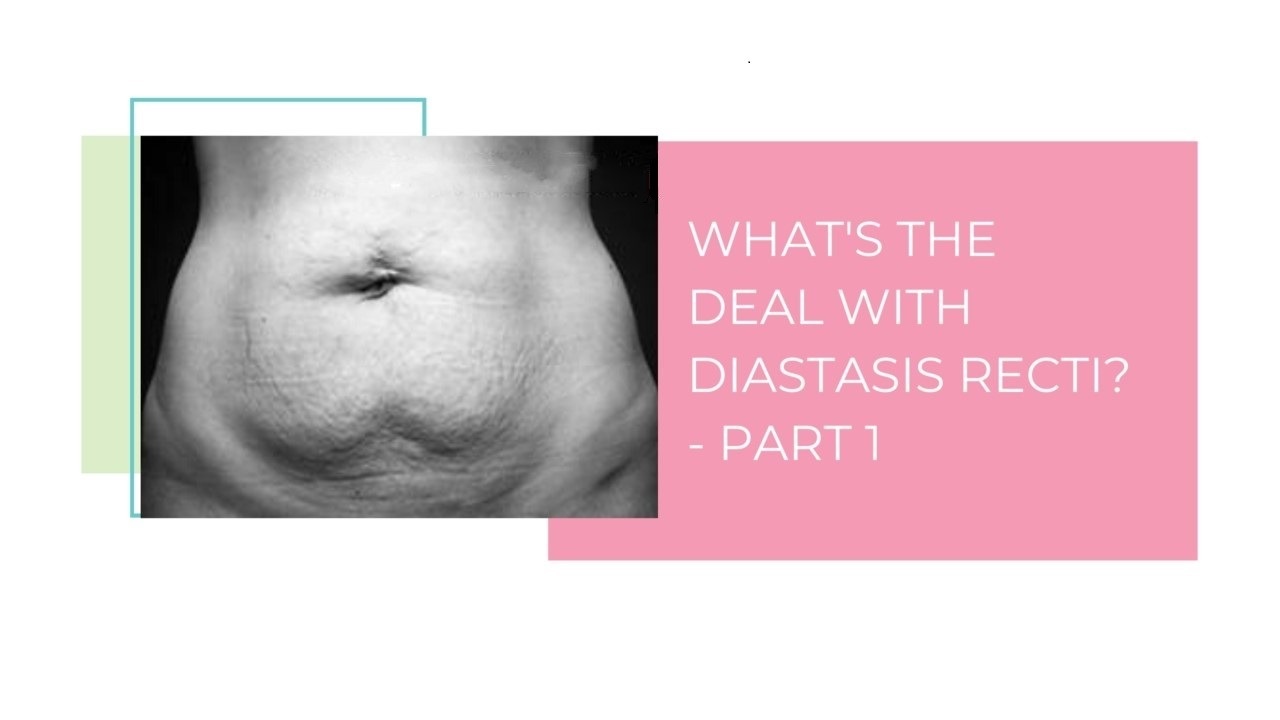
Diastasis recti is the separation of the outermost abdominals from the midline where they are connected via the linea alba.
The linea alba is a complex, three-dimensional, highly structured meshwork of collagen fibers (Axer et al 2001), but I will just refer to it as “connective tissue.” The linea alba softens during pregnancy to allow the two rectus abdominus bellies to curve around the abdominal wall (Coldron et al 2008).
Some of the consequences or complaints that are associated with diastasis are back pain (Boxer et al 1997; Boissonault & Blaschak 1988; Toranto 1990, Oneal et al 2011), pelvic pain (Lo et al 1999, Whittaker 2013), incontinence (Spitznagle 2007), prolapse (Spitznagle 2007), increased risk of abdominal injury (D. Lee course notes 2011) and a bulging abdominal wall, a.k.a. 'Mummy Tummy' (Braumann, 2008).
DRA is very common in pregnancy and in 1988 Boissonnault & Bleschak found that...
- 27% of women in the second trimester have DRA
- 66% of women in the third trimester have DRA
- 53% persist immediately postpartum
- 36% of the DRA remains at seven weeks postpartum
Another study by Coldron Y et al 2008 found that...
- Spontaneous healing of the inter-recti distance at the linea alba only occurs in the first eight weeks
- No further improvements were noted without intervention
- Inter-recti distance remains unchanged at one year
Besides the impact of the growing uterus on the connective tissue, here are some other influences that can contribute to diastasis:
- Changes in intra-abdominal pressure
- Posture
- Forward flexion movements
- Pushing during labour
This is by no means an exhaustive list. It is typically never just one thing but rather a combination of influences that contribute to DRA.
The more common compensatory strategies that develop in postpartum women are overusing the obliques (internal or external), reverse breathing or chest breathing, overusing the posterior pelvic floor muscles and tucking the tailbone.
What I Know From My Experience With Diastasis Recti
- In my experience, DRA affects about 80-90% of the women I see and they have a separation of about three finger widths or more, but it is not necessarily the size of the separation that is the problem. It is the integrity of the linea alba that we need to be concerned with.
- About 60-70% of the women I see have stress urinary incontinence.
- Not everyone with a diastasis has a poochy tummy.
- The poochy tummy is more a result of poor alignment and posture, as well as overuse of the oblique muscles and a tight psoas.
- In some people the separation never returns to ‘normal’ or midline – that would be me. I remain three fingers at my belly button. I typically consider ‘normal’ to be about one finger width. In the studies that have been done, there has never been any consensus about what is actually normal inter-recti distance.
- If the separation never ‘closes’ but the person is able to generate tension in the linea alba and their internal core is synergized (meaning the timing of the pelvic floor, deep abdominals, breathing and multifidus are all as they need to be) then there is no problem and they would be considered a functional diastasis.
- I think the name needs to change.
There is still much to be learned about diastasis recti, but what we do know is that it is very common, that we need to focus on improving the integrity of the linea alba, and that the first eight weeks postpartum are the most critical.
Restorative core exercises help restore the core in the first 8 weeks postpartum to help the muscles re-align, to protect and reinforce the integrity of the connective tissue. and restore core confidence for motherhood.
Recommended Programs
Kegel & Pelvic Floor Exercise Programs for all stages of Pregnancy
The Buff Muff App will help you finally get clarity on the elusive kegel and teach you how to activate your pelvic floor appropriately and then add it to movement.


